My family moved to Moses Lake, Washington just before I entered the 7th Grade and just after my dad received a prophecy (or, a “word from the Lord”) from some evangelical holy-roller that it was the “land of milk and honey.” To fulfill this prophecy (and someone else’s), we gave our house and car away to David and his wife Sheila, a couple of Israeli Jews who’d accepted Jesus Christ as their personal lord and savior after David was miraculously healed of paraplegia by Pat Robertson over the television via The 700 Club and was kicked right off of his kibbutz.
We packed up and hit the road, I-90 straight to the Promised Land where we spent the better part of a decade looking for all of that milk and honey. We never found it. We kept reminding ourselves that Moses and the Israelites had to wander around the desert for forty years before he came within sight of the Promised Land, and we wandered from home to home (some ours, some others’) through a series of evictions while waiting for God to almost literally drop a big pile of money in our laps.
My remaining family is still in Moses Lake, but just after college, I got the hell out.
My years in Moses Lake marked the unhappiest period of my life, and though that was only marginally due to the town itself (teen years are just supposed to be shitty in one way or another); for a long time, I couldn’t dissociate my dysfunctional family life and the perverse spirituality of my youth from my perception of the whistle-stop that I would never again acknowledge as my hometown. I spent years avoiding the place, I rarely called my family, and on my first trip back to visit my mom, I rolled into town with wet eyes, playing “Round Here” by Counting Crows and half-expecting some kind of ceremony as this Prodigal Son returned home.
Now, nearly half of my life has passed by since I left Moses Lake behind for the first time (there was an equally unhappy two-year stint in my early 20s). I now have a wonderful relationship with my mom, my dad is no longer alive, and I’m close with my sister as she has steadily built a beautiful family of her own. Enough time has gone by that I don’t get overcome with dread as I pass under the freeway sign reading “Moses Lake 11 miles.” Enough time has passed to allow memories to fade into sepia and take on an air of novelty instead of anxiety. Enough time has elapsed for me to see Moses Lake as just another small town in rural America, complete with quirks, shortcomings and some curiosities.
I spent a few weeks in Moses Lake recently helping my brother-in-law renovate some of his rental properties. The streets were at once familiar and foreign. There are new businesses, and old ones, and some that have merely changed names. Spending time there felt like visiting a foreign place that you’re familiar with only for the fact that you’ve visited a bunch of times before, not a place where you once lived for a lot of years. So, when the Spring Festival geared up over Memorial Day weekend, I got curious. My sister invited me over for dinner on Saturday evening, but I declined, because I wanted to spend some of my free time walking around to get some “local flavor.”
“You’re going to find local flavor in Moses Lake?” she asked.
“Yeah, I just want to walk around and see what I see,” I told her.
I wanted to see the festivities through the eyes of a traveler. I thought I could experience Moses Lake like James Fallows as he piloted his plane around the country documenting what he found in Small Town America for his series “City Makers: American Futures.” I thought I could explore Moses Lake with a sense of disconnected novelty like Bernard-Henri Levy as he reenacted Alexis de Tocqueville’s journey that would become one of the most flattering descriptions of America (by a foreigner, no less) ever put on paper: Democracy in America.
Like a good dive bar, I hoped walking around Moses Lake during SpringFest would offer up an eyeful of texture and color in its decrepitude: a dive town. I wanted to observe the quaintness of a weekend celebration that brings a little town together. I wanted to see the smiles on children’s faces as they shoved cotton candy into their sticky mouths. I wanted to see young men try to win prizes for young women while demonstrating some degree of athleticism or skill playing carnival games. I wanted to see lovers, young and old, holding hands on a Ferris Wheel, sneaking kisses at the apex of each revolution. I wanted to smile. I wanted to see flashing lights, hear the bings and pops and chimes and thuds, and inhale the bewildering scent of meat and sugar that you only smell at a carnival.
It was unexpected, then, that instead of a journalistic kind of objectivity, I found myself resurfacing fond memories of SpringFest as I walked toward all of the activity at McCosh Park and the neighboring Lion’s Field.
In a small town, something like SpringFest is awash in sparkle for a young teenager. It’s common for kids to coordinate a night at the carnival, getting dropped off by a nominal chaperon with an agreed-upon pickup time that offers a few hours of unencumbered freedom. With a few bucks in your pocket, you’re left to wander around parent-free, eating overpriced hot dogs or elephant ears, buying trinkets or stink bombs, playing games, going on the rides, and hoping beyond hope to get a magic moment with that girl you have a big crush on.
My first SpringFest sans the parents was in the 8th grade. I went with my neighbor Robbie Kimble, who was in my grade, and we met up with another acquaintance Marty Toya. We did what kids do at a carnival. We spent money on shit we’d never use again, strategized all kinds of mischief on which we’d never follow through, and talked about girls.
Marty enumerated the virtues of a girl in our class, Amy Alsted. This list didn’t extend far beyond, “She has a perfect ass,” illustrated with gesticulation resembling a master potter at his pottery wheel. Amy sat in front of me in Mr. Hunt’s history class, and she was really nice. I hadn’t really noticed her ass before (I was as straight-laced as they come), but she was awfully pretty. So, in the spirit of camaraderie, I decided right then and there that I had a crush on Amy, too — a crush that I’d forget about by the time the sun came up the next morning. So, as we bought cheap key chains with funny pictures on them for keys we didn’t have or stink bombs that we’d never have the nerve to set off in the hallways at Chief Moses Junior High, and as we rode on The Zipper, The Scrambler, The Gravitron and The Hurricane or shared curly fries doused in ketchup so we could honestly tell our parents that we’d eaten real food, we talked about how we really hoped we’d run into Amy. The conflict of interest there wasn’t apparent, and I wouldn’t have known what to say or do if we did cross paths with Amy, but we were comrades-in-arms that night as we all kept an eye out for the same pretty girl. A girl who would never appear.
The blinking lights, the stench of carnival food, the noise of screams and laughter from the people on the rides, the intoxicating feeling of independence and the small expectation of romance in the midst of it — these are the things that make something like SpringFest magical. This is what I hoped to see as I made my way toward McCosh Park. At first glance, things seemed about right.
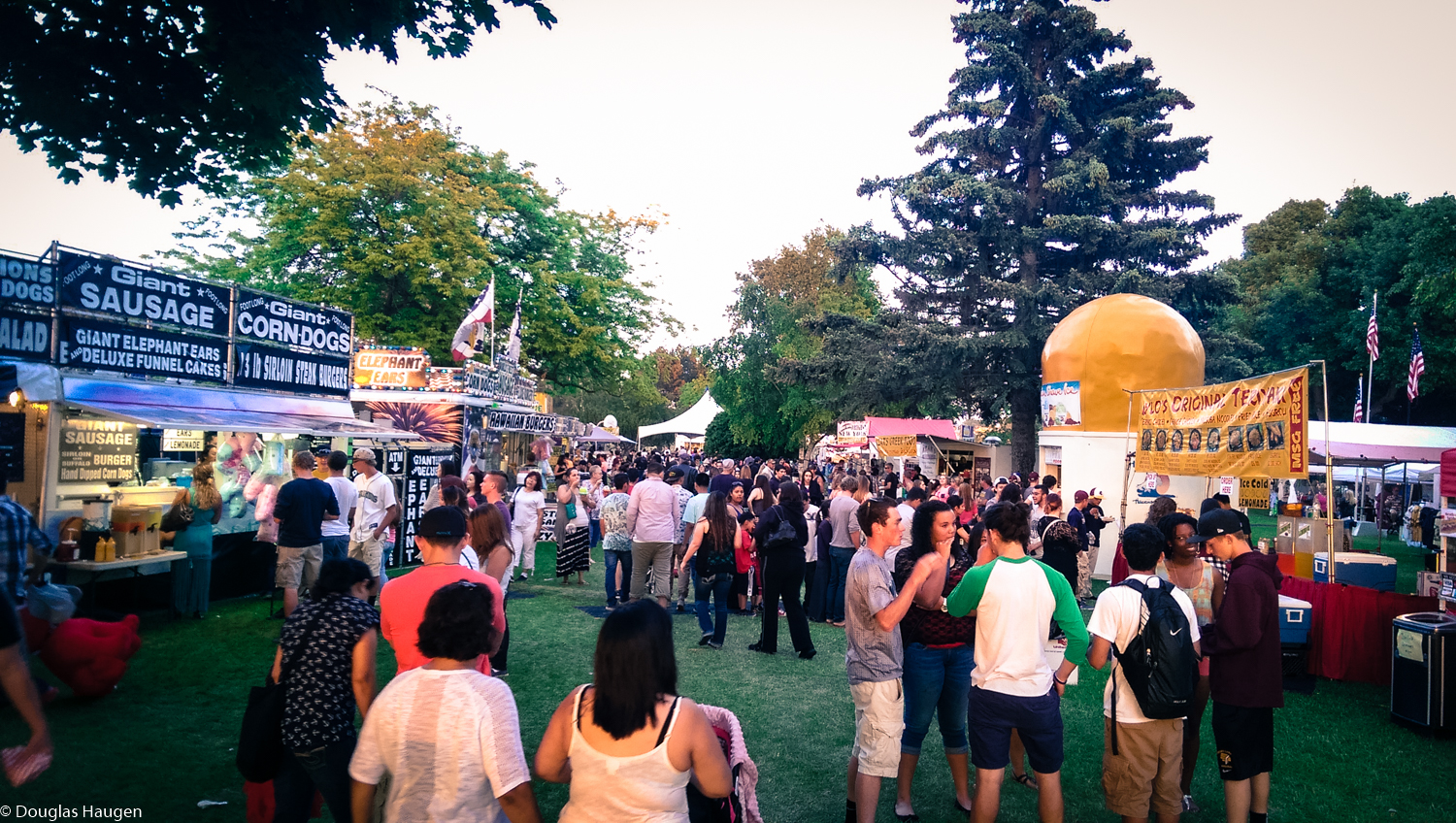

But, as I moved around the grounds like a ghost, things started to feel horribly wrong.
I decided to check out the band playing at the Centennial Amphitheater. I remembered sitting on blankets on the grass among a crowd of people as bands played covers of classic rock ‘n’ roll. The music was rarely great, but what the bands lacked in talent or originality was more than made up for by the enthusiasm of locals crowding together for a free concert. Some would dance. All would clap and cheer.
One year, a military jazz orchestra performed who were fantastic. A full set of big band swing had people on their feet, and my friends and I danced in the grass while trading scat solos and cheering each other on.
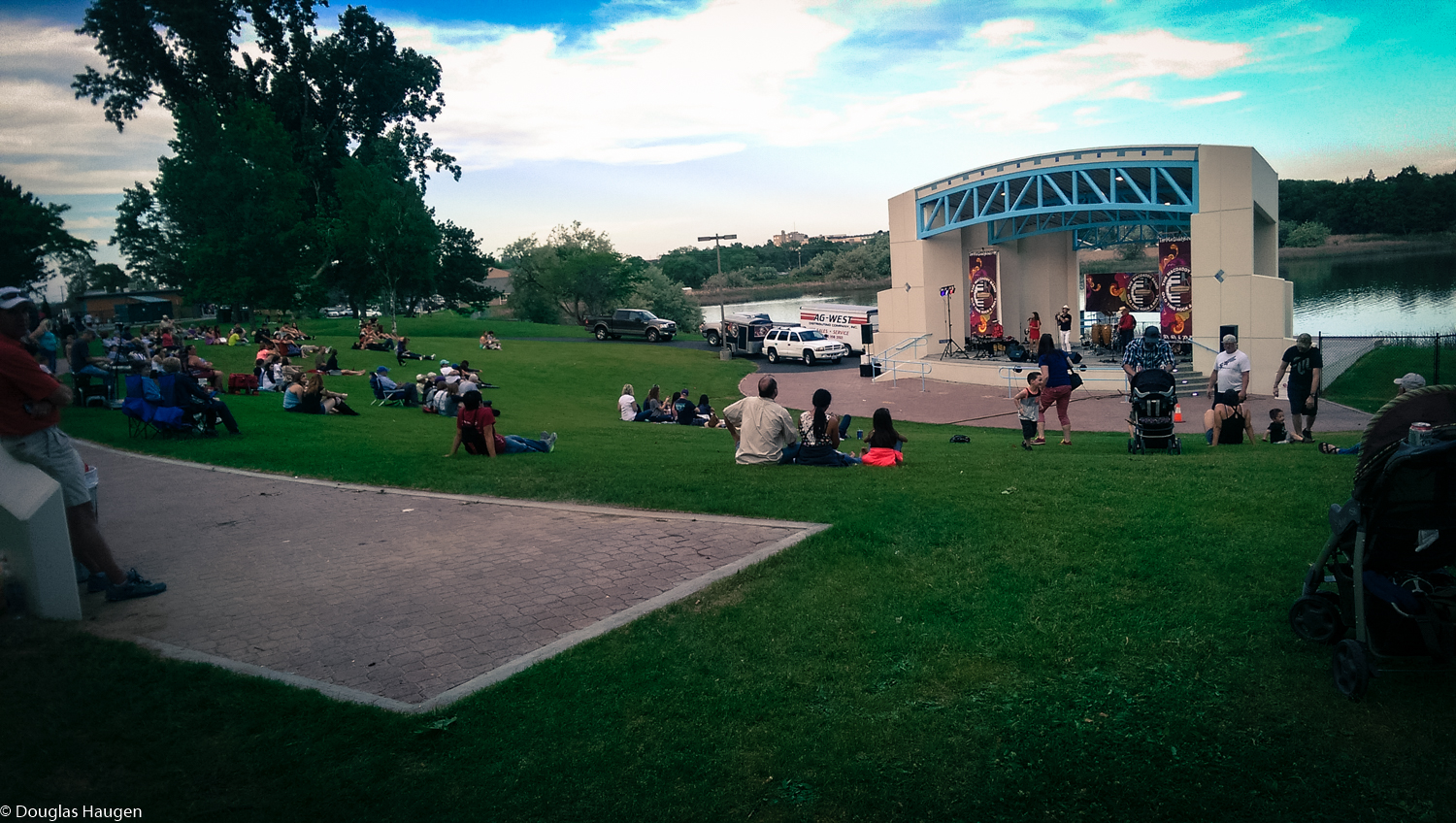
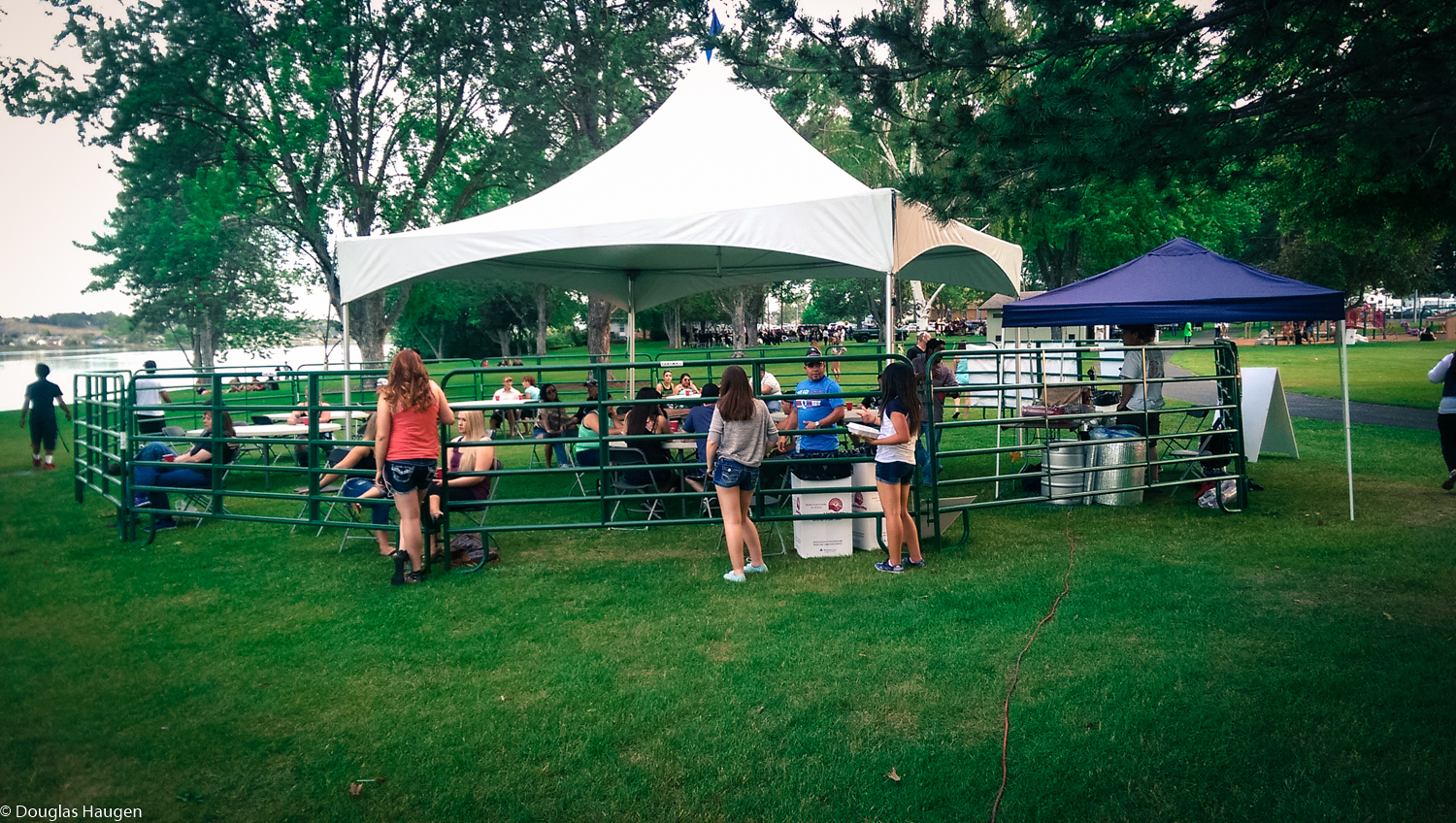
But this was not then. This was just sad. The concert in the park for SpringFest was anticlimactic. There were just a handful of people littered across the grass as if they merely had nothing better to do while the classic rock cover band tried in vain to electrify what they pretended was a crowd. Even the beer garden, a feature that had been added in recent years, had little beer and fewer beer drinkers herded in behind a makeshift cattle pen. They looked bored, discontent, and restless as if they’d rather be in any local tavern rather than endure SpringFest a minute longer.
I decided to move on.
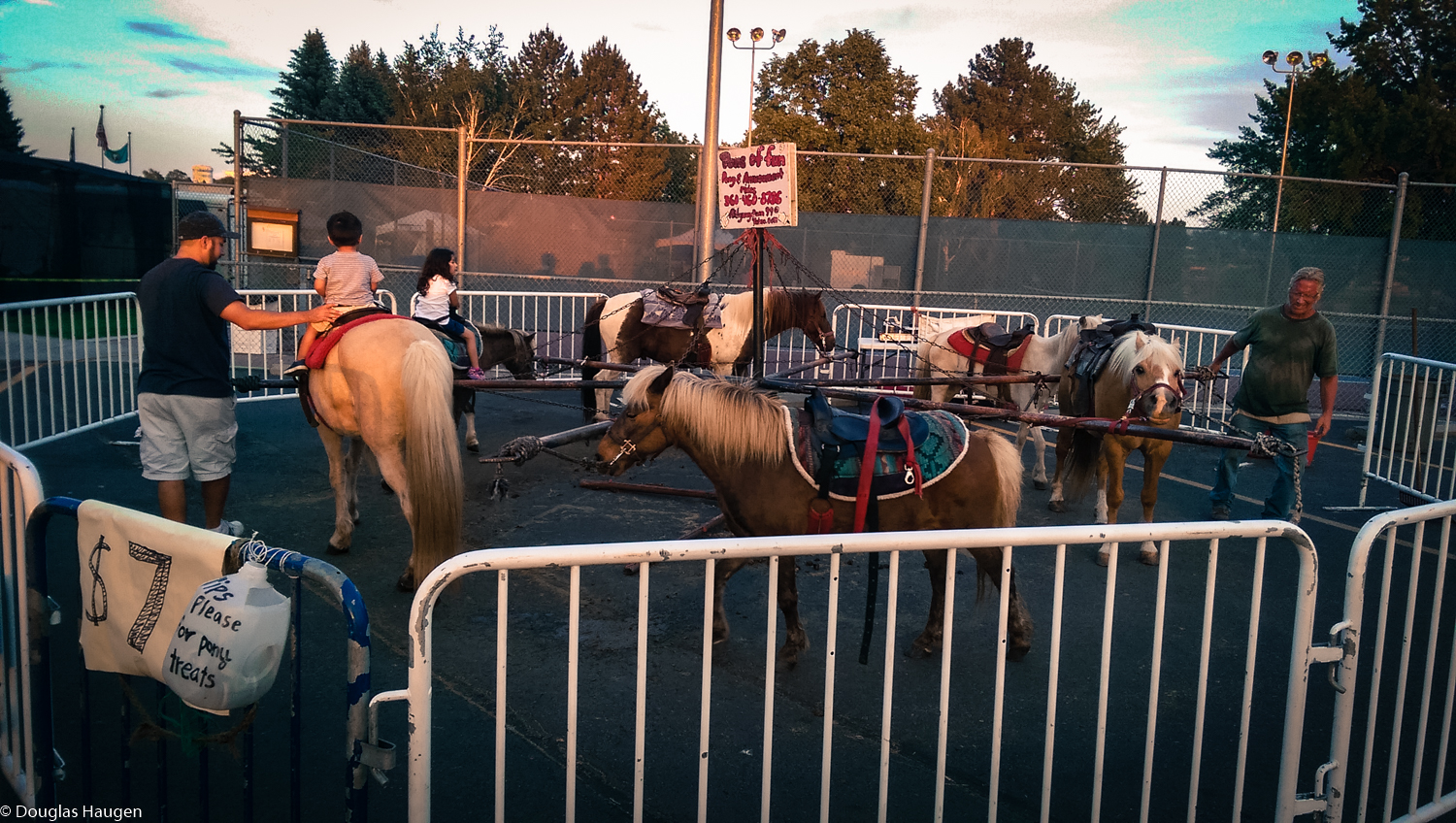
In the park’s parking lot, I came across the pony rides. Six ponies plodded along in a circle so slowly that their hooves barely made the recognizable clip-clopping sound on the asphalt. Four of the saddles remained vacant, and maybe it was just me, but the ponies looked resentful that their time was being utterly wasted. The two kids taking a ride were less than entertained. Maybe children don’t like ponies anymore, maybe $7 is a lot to pay for a few minutes moving in a small circle at under 1mph, or maybe the prospect of riding on the back of a pack animal just pales in comparison to the magic of mechanization offered by the carnival rides. In any case, I decided to go observe the machines.
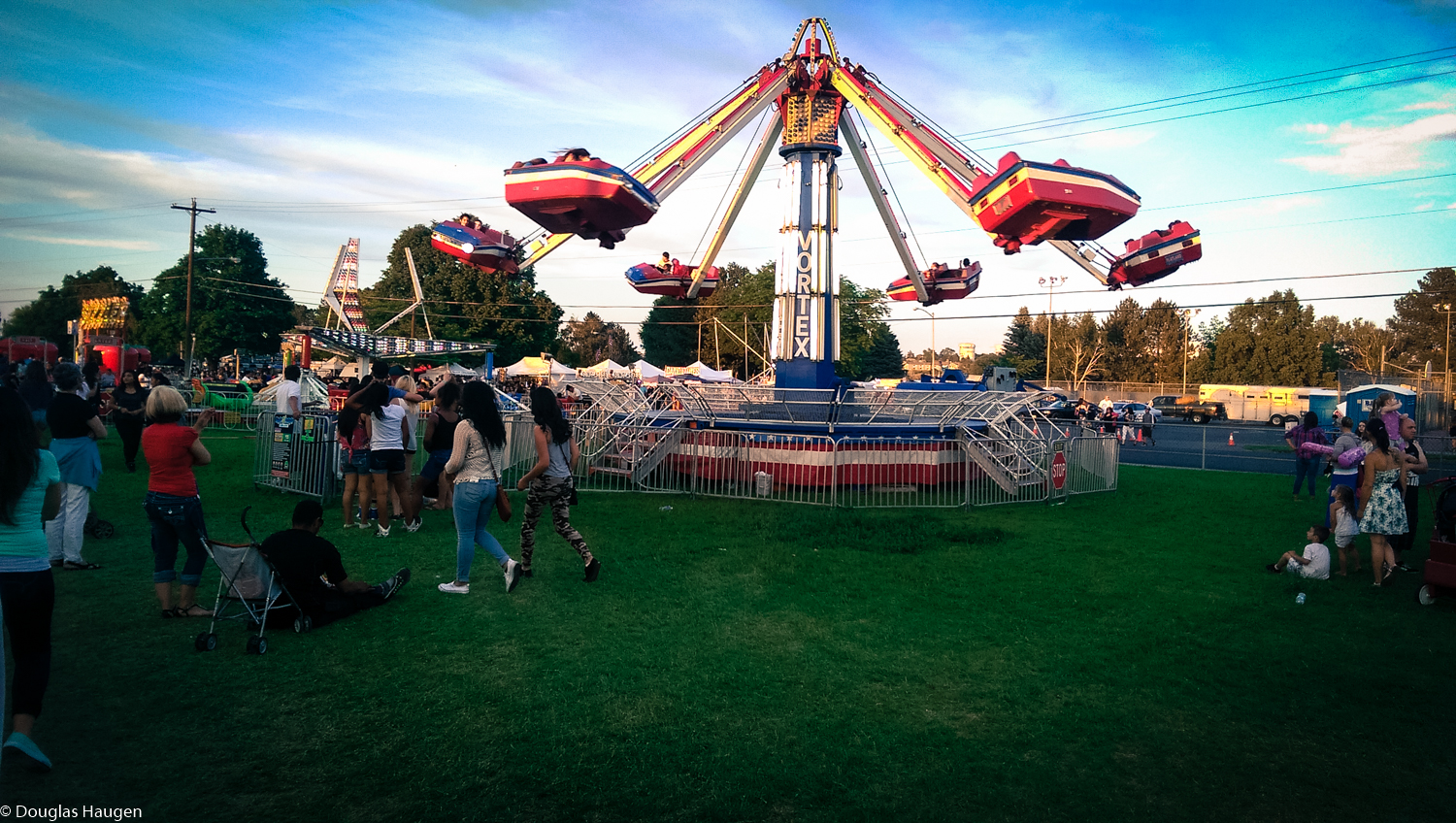
The Hurricane, however, revealed a perverse parallel to the pony rides. Six pods bobbed up and down in a circle, and most were vacant. The kids on the ride weren’t screaming or laughing or vomiting. It was like someone pressed a giant mute button, and all that could really be heard was the rumble of the gears.
When I was eighteen years old, I took my first girlfriend Jacqueline to the county fair. Full of naive notions of classic romance gleaned from family-friendly television, I was determined to win her a big prize playing a carnival game. We stepped up to a booth, and I put my money down on the counter for both of us to play. All I had to do was shoot a stream from a water pistol into a clown’s mouth until the balloon above his head popped. The carny prepped us, put fresh balloons on the air nozzle above the clowns, and counted down. I took aim, squeezed the trigger, and with the precision of a sniper, murdered that clown. But, as my balloon filled with air, I heard Jacqueline’s balloon pop. She’d won a prize.
I wanted to be the one to win a prize, a prize that I could present to her. So, I slapped down more cash, and we went another round. I took a few deep breaths, focused, and drew a bead on the clown’s mouth. When the bells rang, my water stream shot cleanly into the clown’s gaping pie-hole, and I held it steady while I imagined the prize I’d win. Jacqueline sprayed water all over the place, but it was her balloon that popped first. She won a bigger prize.
Not to be a quitter, I slapped more money down for another round. And then another. When I was out of cash, Jacqueline walked away with the largest prize they had: a stuffed Smurf-like creature bigger than her torso. I walked away with shame.
As we made the obligatory pass through the craft barn, stocked to the rafters with patchwork quilts and lawn ornaments made of car parts and rusty garden tools, I surreptitiously stepped away for a few minutes and filled out a credit card application in exchange for a small stuffed animal a local bank was giving away as an incentive to open new accounts. I didn’t get the credit card, but I did get an ugly little teddy bear only slightly bigger than my hand that I presented to her with flourish.
“Awww, what’s this?” she asked.
“I got it for you!”
“Where’d you get it?” she prompted for a heroic story of skill and triumph.
“Just over there,” I told her, avoiding the question.
“Well, thank you! I love it,” she said sweetly.
Twenty years later, strolling around the Spring Festival, I wanted to see other young people take their chances at games of luck and skill, winning prizes, trying to impress those certain someones, and presenting tokens of affection. I walked over to the carnival games.
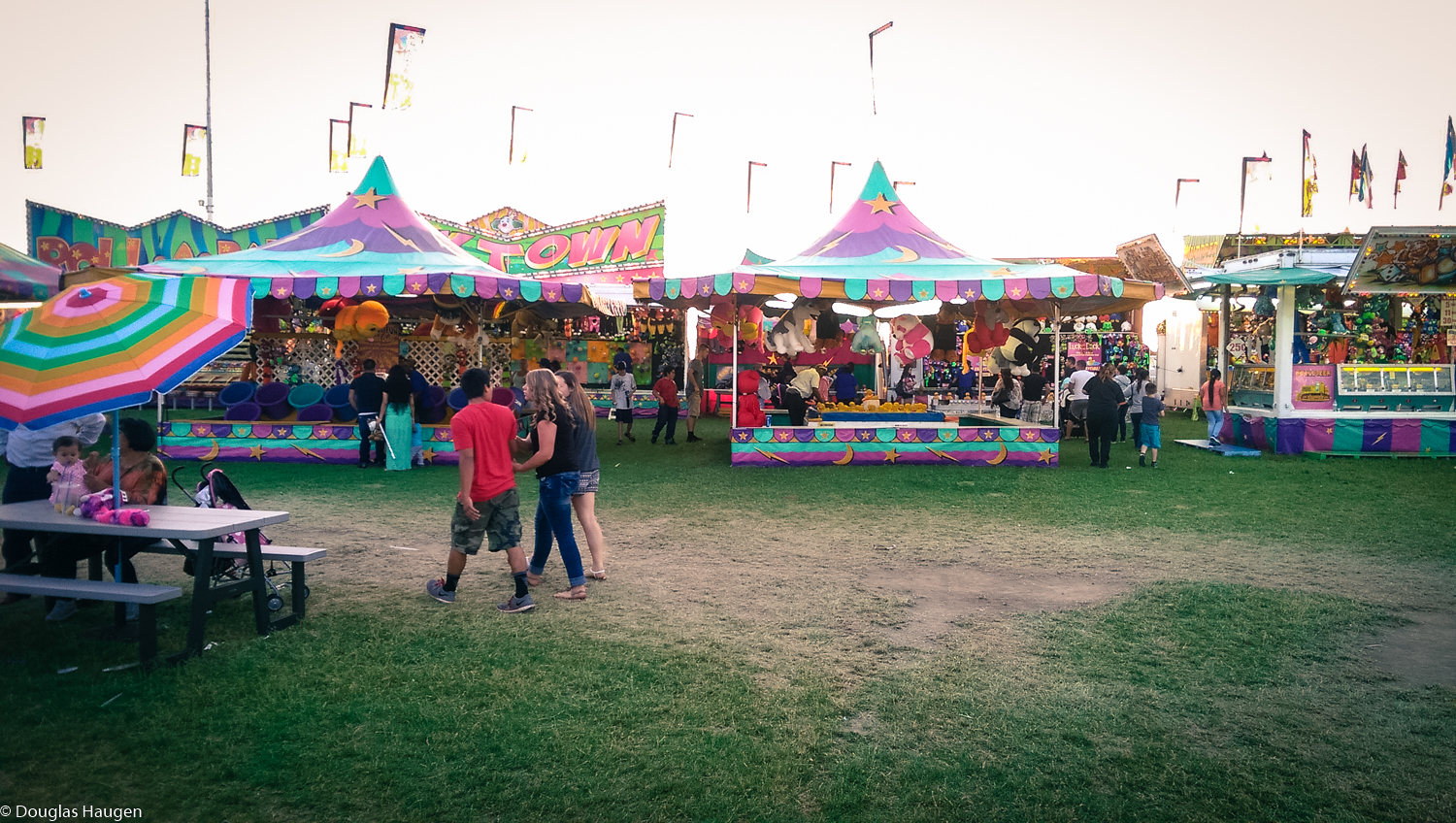

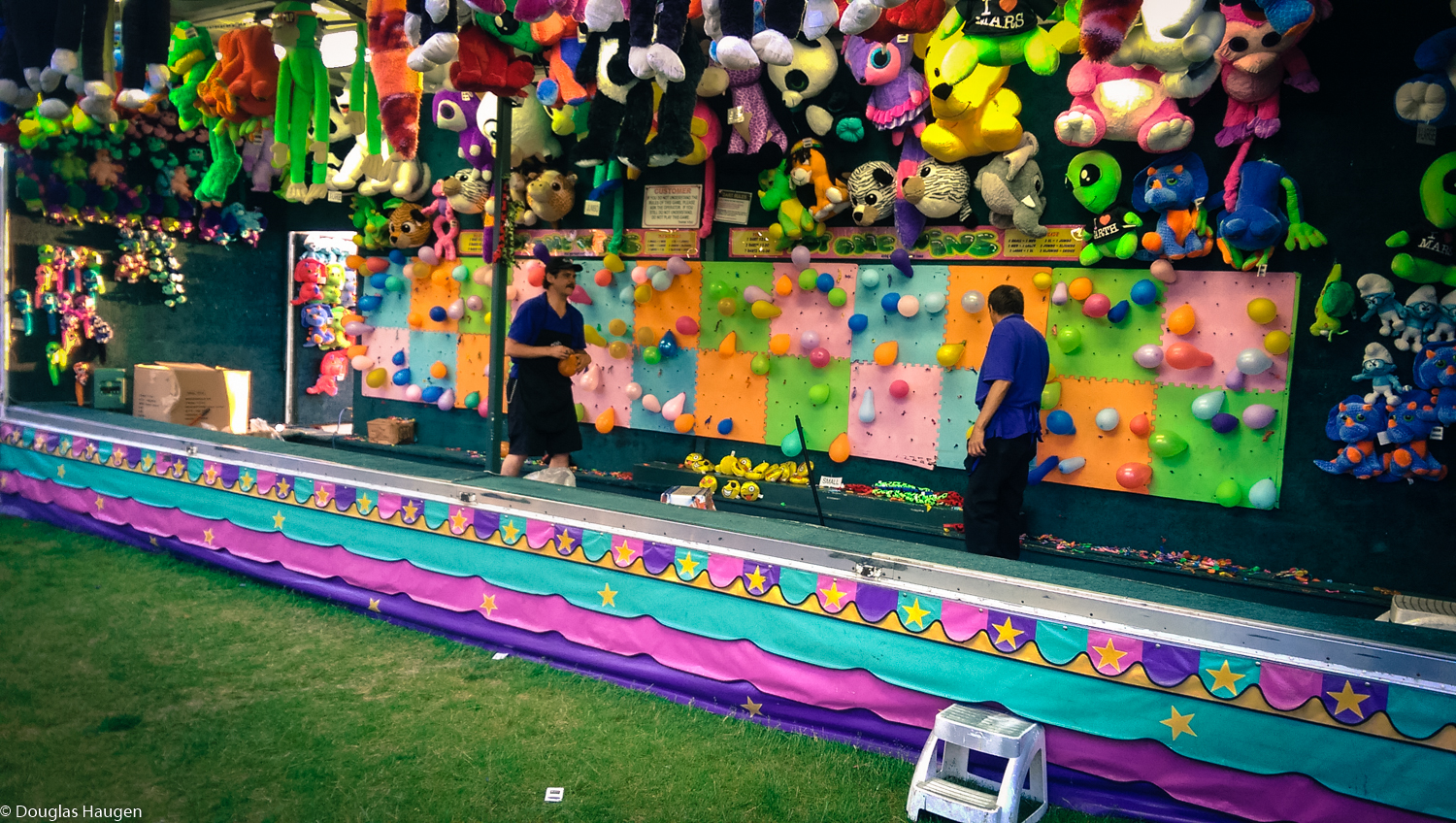
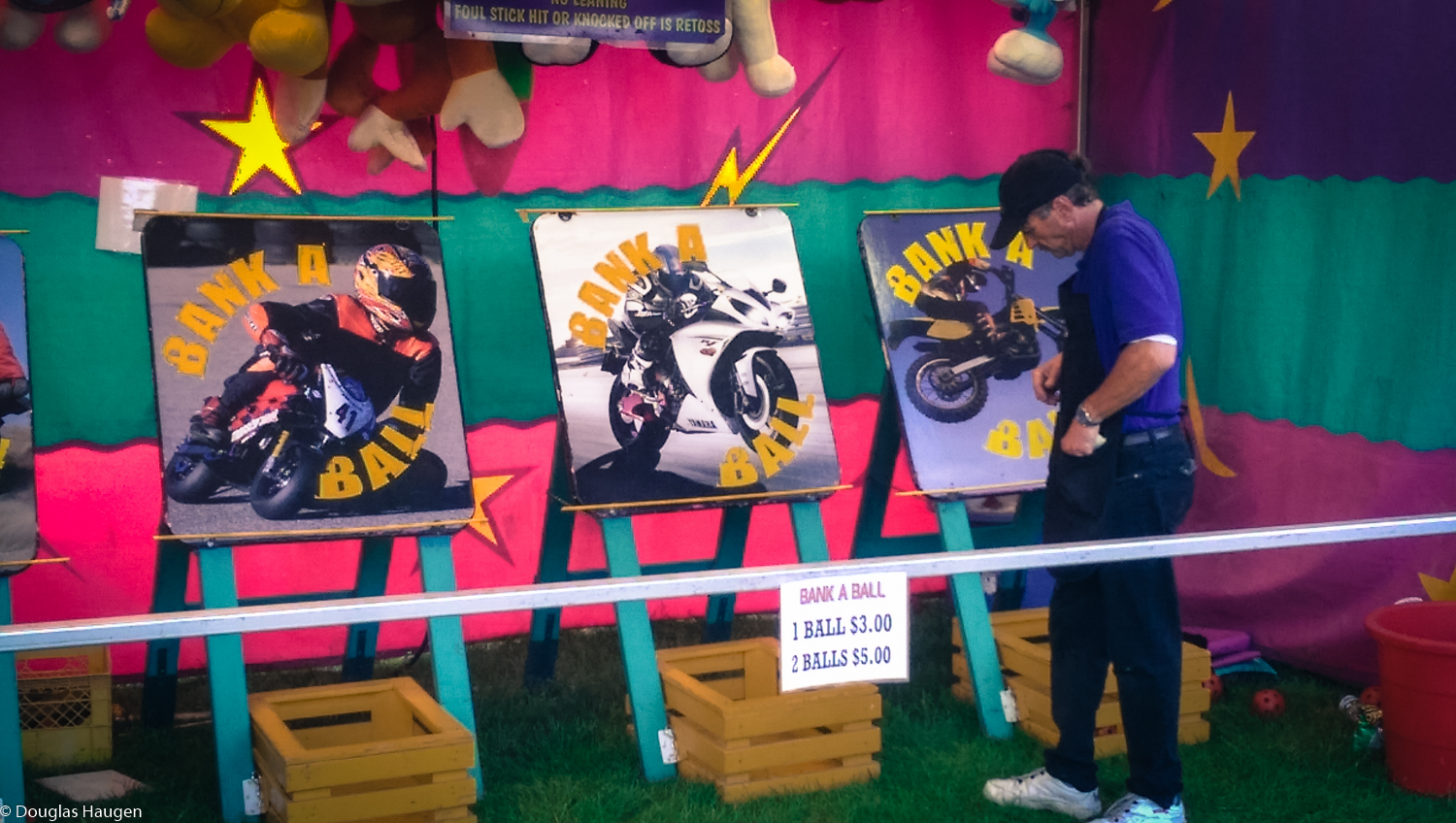
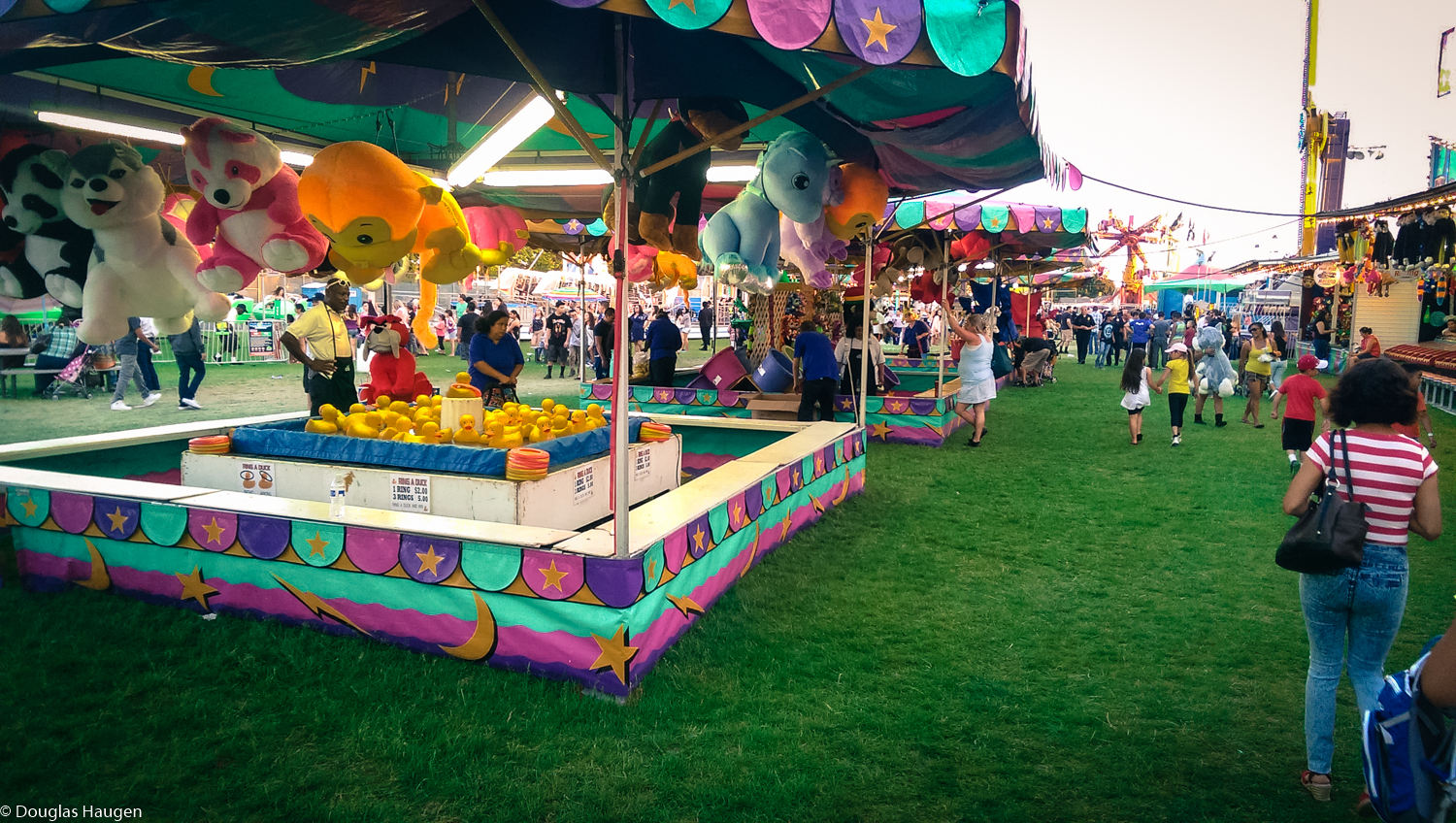
The carnival games weren’t much better than the rides. There were no crowds. There were no lines of bright-eyed competitors waiting for a chance to win giant stuffed animals. The counters remained largely vacant. The carnies were bored, shuffling their feet, counting and recounting the small wads of cash they’d managed to rake in that day. They were available in the unlikely event that a passerby actually took interest in their game, but they certainly weren’t barking at the crowd to drum up business or encouraging anyone to step right up. They carried out their duties perfunctorily, counting the hours and minutes until they could close down.
Occasionally, I’d see someone walk past a game, slow down to size it up, but then continue on in no particular direction. The carny would barely glance up at him or her as it it was a foregone conclusion that the person wouldn’t be interested. Their shoulders slumped as if they hadn’t only given up on their own games, they’d given up on life.

I didn’t see any young couples on a date at the carnival, holding hands and smiling at each other dreamily. I did see teens and ‘tweens loitering in groups. The guys leaned casually against anything they could lean on, putting on an air of nonchalance and posturing as toughies in their tanks and muscle shirts. The girls strutted around in Daisy Duke shorts riding high above the crease between their legs and under-developed asses, their faces gaudily and inexpertly done up with drugstore eyeliner and eye shadow. The over-sexualization of junior high kids made my stomach turn.
I felt dirty, not just for seeing parts of adolescent bodies that I shouldn’t see, but also for the realization that I’d turned my head at many women dressed the same way, women that could be the mothers of these tiny sluts, women that would be horrible role models if any of them were to become the mother of my future daughter. Being comfortable and free with your body is one thing. Being a skank with self-worth predicated upon lecherous male attention is an entirely different thing. What mothers would let their daughters out of the house looking like this? What parents would allow their child to present their bodies like a neon “vacancy” sign at a roadside roach motel? I like to think that I’m a modern man; I like to think that I am on the leading edge of social progress, that I don’t hold fast to traditional gender roles, that I can appreciate free expression in all its forms; but to see these twelve-year-old hoochies dangle their asses like bait filled me with a sense of repulsion, and I felt a little sick.
Where was the innocence that I remembered? Even Marty Toya, making lascivious comments about a girl at SpringFest when I was young, was closer to a dog chasing a car than he was a sexual predator; if he would have caught it, he probably wouldn’t have known what to do with it. And the object of his desires, Amy Alsted, was anything but a hussy.
All of this was starting to get me down. I spotted a staff member wandering the grounds, and approached him.
“Excuse me, can I bother you for a second?”
“What do you need?” he asked.
I didn’t get his name, but I think of him as Carl. Carl the carny. Carl was a portly man with a soft chin and bushy mustache. His graying curly hair billowed out from under his trucker cap like it was gasping for air after nearly drowning.
“How long have you been working SpringFest?” I asked him.
“Oh, this is only my second year at this show,” he replied, “I usually work other shows, but I was here last year. Why?”
“Oh, I was just wondering if SpringFest had changed over the years. I grew up here, and I’m here visiting now. It just seems different than what I remembered from childhood. Has attendance gone down or something?”
“Well, this is only my second time working this show, but attendance is about the same as last year. But from what I understand, it’s really grown since it started. This show just keeps getting bigger and bigger.”
“Really? Huh.”
“Yeah, that’s what I hear.”
“No offense to you or your carnival company, but it just seems a little lackluster. I was walking around trying to figure out of SpringFest had changed, or if I had changed. There’s no magic.”
“Well, I’ve been doing this for over twenty years, though this is only my second time at this show,” Carl said, “and I can totally understand how the magic can wear off after a while.”
“So, it’s me that’s changed.”
Carl shrugged and nodded.
I thanked him for his time, and walked away.
I received a text message from my sister at that point telling me that the parade was about to start, and that she and the rest of the family were settled in on the sidewalk outside her shop on Third Avenue. I couldn’t stand another minute walking around the carnival, so I decided to join them.
There are two parades in Moses Lake each year, one celebrating produce and the other celebrating people. The first is the “Ag Parade,” where farmers wash up their biggest combines, swathers, wheat trucks and tractors and drive them down Third Avenue (the equivalent of the proverbial Main Street) in a celebration of the agriculture that has been Moses Lake’s mainstay for time immemorial. The second is the Moonlight Parade during the Spring Festival.
The Moonlight Parade is what you’d imagine any local parade to be. You see elected politicians flashing toothy grins while waving from the back seat of convertibles on loan from local car dealerships. You see every marching band from every school in the region. You see veterans and soldiers on active duty from various branches of military brandishing flags in full dress uniform. You see church congregations marching with banners. You see themed floats, some towed by sturdy pickup trucks, exalting the winners and runners-up of each neighboring town’s Junior Miss pageants.
As I made my way to join my family, the parade had already started.
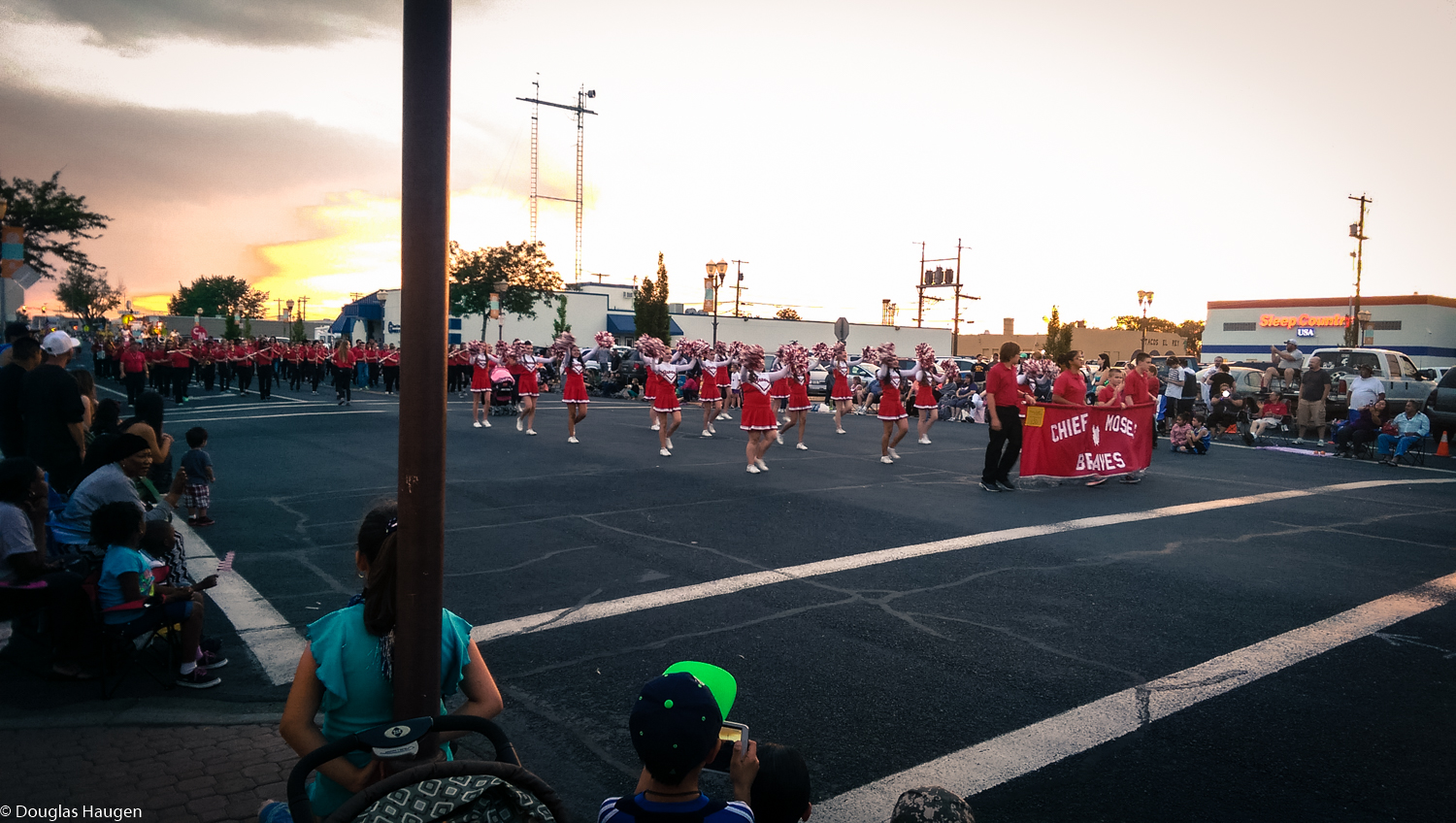
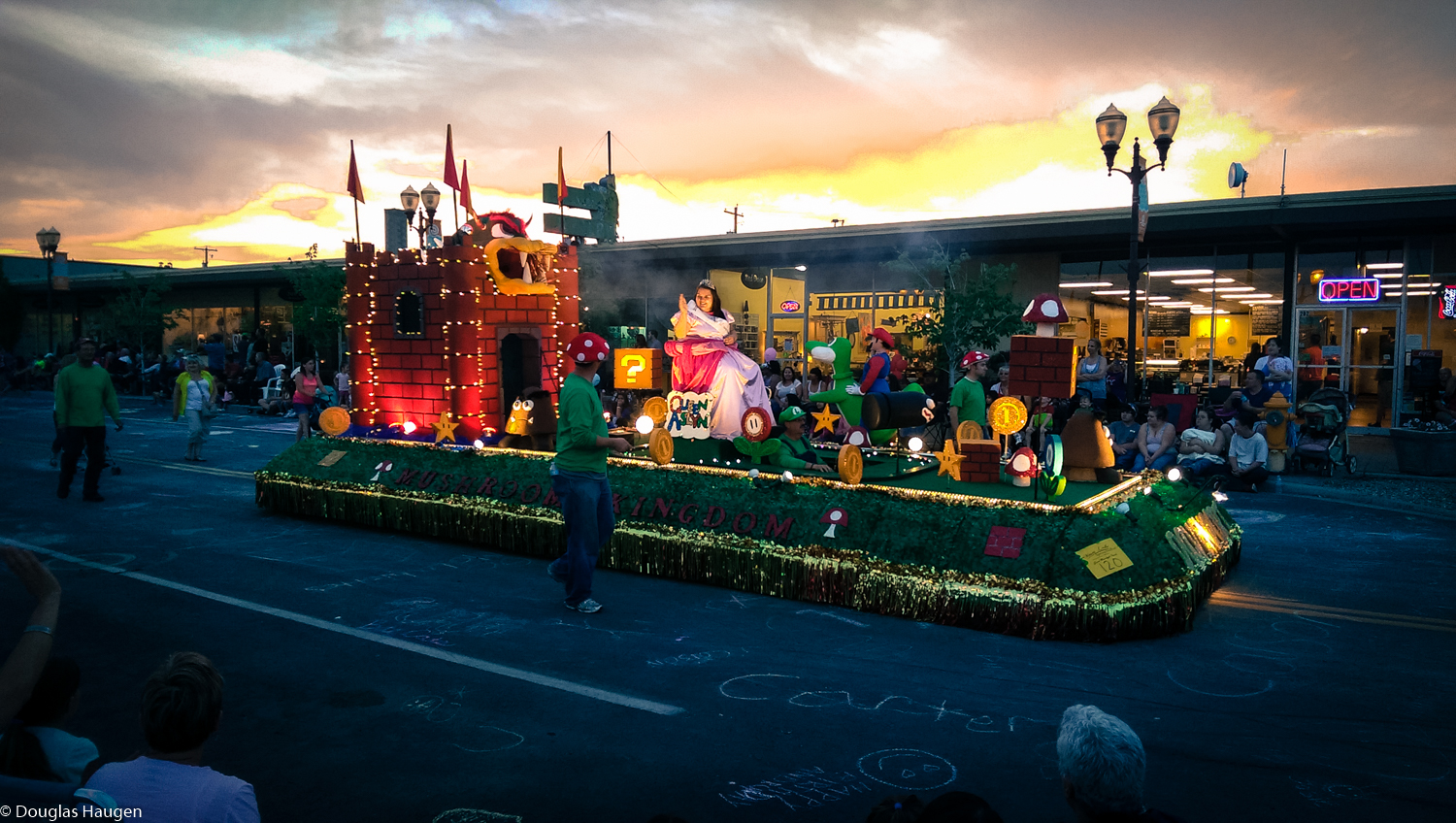
I’d marched in this parade once. When I was about seventeen years old, my church secured a spot in the procession, and we marched down the street waving a bunch of hand-sewn banners that usually decorated the walls of our building. In retrospect, this was probably a move to improve our reputation in the community, which largely (and probably rightly) thought of us as a bit of a cult, what with all of our tongue-talking, faith-healing, prophesying and rolling around on the floor during services. But at the time, I thought we were offering a glimpse of salvation to the heathens, as if some guy would see our passionate conviction and think to himself, “Huh. These people might be on to something,” and dedicate his life to Jesus right then and there. I never heard an account of this actually happening.
Now, as parade participants waved at the crowds lining the sidewalks, and as the crowds cheered and waved back, I couldn’t get into the spirit of it. I couldn’t smile at the homespun community pride that united everyone else on a warm night on the cusp of summer. I couldn’t casually observe the beauty of a people honoring their heritage and achievements, banding together to revere the fruits of their many labors. Instead, I saw it not as a testament to success, but a reminder of shortcomings. I saw it as a celebration of failure, putting perfume on pig shit.
My sister and her kids, my mom and my brother-in-law’s parents were settled in on lawn chairs in front of my sister’s shop, and I sat down with them. My nieces were wide-eyed at the spectacle. My family was smiling, laughing, and waving at everyone in the parade. They were proud to be there in support of the military who safeguard our freedom. They were proud to be there in support of the schools and their marching bands. They were proud to be there in support of the young women who had worked so hard developing their talents and receiving recognition in pageants. They were proud to be members of the community that night. I was not.
It was clear that I hadn’t completely severed my connection to Moses Lake, that I hadn’t left my past behind me, but I had changed. I couldn’t revisit the chest-swelling satisfaction that I’d sometimes been able to tap into when I was young, but I also couldn’t see it as just another roadside attraction like a traveler visiting unfamiliar territory. Instead, I found myself in the role of a martyr, casting judgment on my unwitting persecutors.
I needed to escape, and fast. I quietly stood up, and walked into a Mexican restaurant behind me.
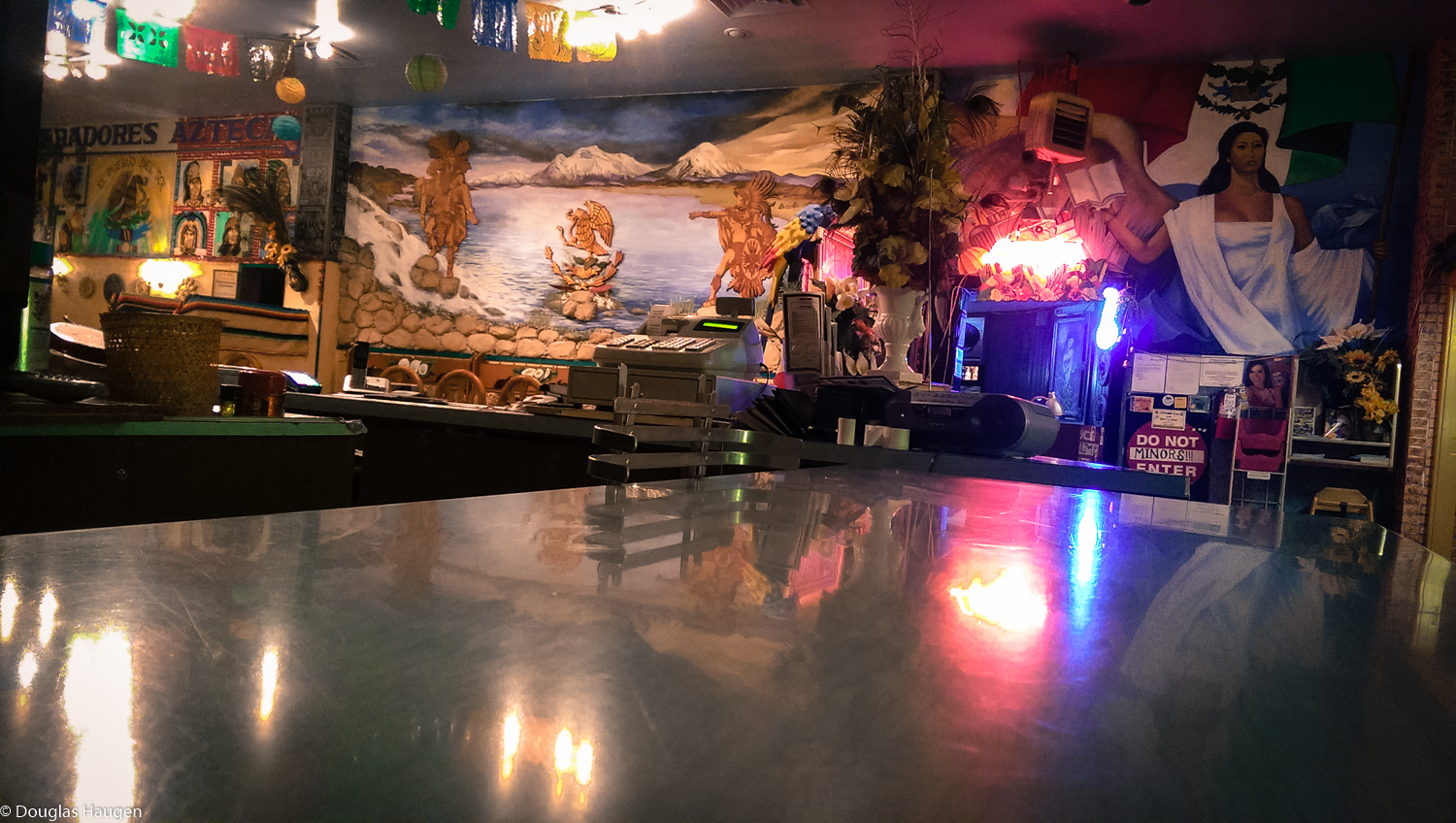
Naturally, the place was nearly deserted. One family sat near the window watching the parade outside while finishing their meal, the two children restless after having lost all interest in their food. I sat down at the bar, and a server approached me.
“What would you like,” she asked me.
“Whiskey. Do you have whiskey?” I wasn’t sure if an authentic Mexican restaurant would have whiskey, or if they’d only serve tequila and cerveza.
“Sure, what kind do you want?”
“Do you have any rye?” I asked, encouraged by the suggestion of a selection.
“We only have one kind of whiskey. I don’t know what it is.” My encouragement was premature. Why she asked me for my preference while only stocking one kind of whiskey is beyond my comprehension.
“Well, whatever it is, I’ll take it. Neat, please.”
“No problem. Do you want it with Coke?”
“No, just neat. Straight.”
“No problem. Do you want it over ice?”
“No. Just whiskey in a glass. No ice or Coke.”
“No problem.”
The server headed into the back room for a minute, and came back with a glass of whiskey. She set it in front of me, and I thanked her with more enthusiasm than I’d been able to muster for hours. I took a sip, and relished the swill in my glass.
With the parade at my back, the music and cheers stifled by windows, I sat and contemplated my mental state.
I’d had two distinct and mutually exclusive expectations when deciding to roam around the Spring Festival. I’d wanted to experience it like a stranger in a strange land. I’d also wanted to experience it like a native son returned home. I’d wanted to relive some of my few happy memories from my adolescence in Moses Lake, only to find that the varnish had been worn off over time. This disappointment caused the discoloration of my objectivity, trading passive amusement for judgment and seeing only how every aspect of the Spring Festival failed to rise to the level of the festivals I’ve come to know as a man living in a much larger city than Moses Lake.
I’ve changed, that’s certain. In most ways, I think I’ve changed for the better. But, it’s perhaps unfair to place new, heightened expectations on relics of the past. It’s unjust to cast aspersions on a community as they express pride in their best, scoffing at how their best isn’t good enough. It’s unfair to mourn how things have changed over the years while simultaneously criticizing for things not changing enough.
The chubby kid I’d seen with the waffle cone and inflatable battle axe probably had an amazing time at SpringFest. The young parents I’d seen pushing a stroller through the grass probably loved the first installment of what would be an annual tradition with their growing family. The Junior Miss probably had a magical evening on her float, awash in sparkling lights making her tiara gleam as crowds of people made her feel like true royalty. And somewhere in the park that evening, two kids probably officially became exclusive, and would be determined to hold that night in their memories forever.
I finished my whiskey, left cash on the bar, and rejoined my family on the sidewalk outside. The parade was over, and they were gathering up their lawn chairs and the children.
“Where have you been?” my sister asked.
“In there,” I pointed. “How did the kids like the parade?”
“They loved it,” she said.
And I smiled.