
Just a few months ago, the talking heads that I watch were all twitterpated about Ebola. Ebola this, Ebola that, Ebola, Ebola, Ebola. The thing is, the commentary was centered around Ebola in the United States. Politicians were grandstanding about their respective plans to minimize the risk of an Ebola outbreak on our shores, and they were criticizing each other about failures in leadership, readiness and apathy. Is the president doing enough to prevent an Ebola outbreak? Does the CDC have an adequate plan to combat Ebola in America? Should the Surgeon General resign because two people got into the US with Ebola? Should we ban all travel to the United States from West Africa? Everyone in government and in the media were freaking the fuck out, and we were taken for a ride right along with them.
But, things turned out fine. We only had four cases of Ebola in the United States, and only one death. Everyone else fully recovered and were released from the hospitals with a clean bill of health. The CDC was fine, the Surgeon General was fine and the president was fine. There was no need to ban travel from West Africa, because there were no flights to the United States from West Africa to ban. And, after an out-sized panic over Ebola, it was pretty anticlimactic when we saw that Ebola in the US looked less like War of the Worlds and more like Wuthering Heights. The media simply turned their attention to other things like a baby who gets bored of holding your finger.
During that media maelstrom, I was critical. I was informed enough and rational enough to know that there was no need for alarm. I watched the idiocy play out and shook my head at the misinformed pontificating, the maneuvering for political advantage and the malcontent finger-wagging of everyone who should know better.
And while I sat firmly on my high horse, there was something I didn’t stop to consider at the time—the people in West Africa.
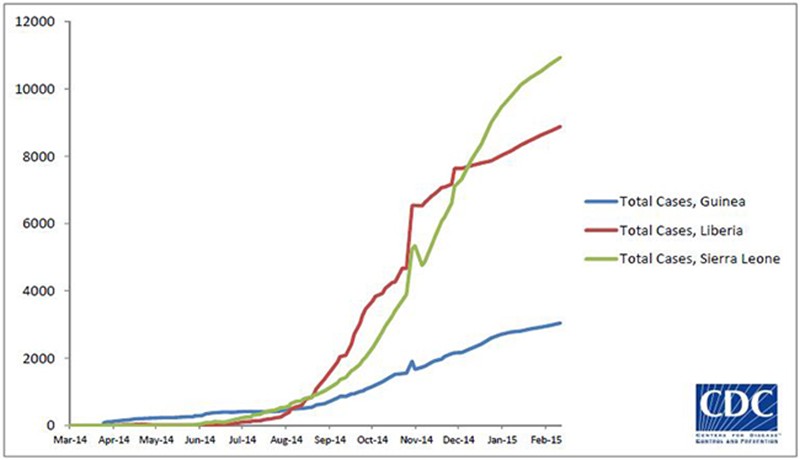
Yeah, we all knew that the Ebola outbreak in Guinea, Liberia and Sierra Leone was the worst in history; but many of us only thought about this in the context of the risk to us in America. Holy shit, what about the people that are actually suffering from this problem? There was no crisis here, but that doesn’t mean there wasn’t a crisis. Instead of bitching and moaning, whimpering, hand-wringing and pissing our pants over the bogeyman in our closet, we should have been concerned with the very real killer overseas. Think about this—As of February 13, according to the Center for Disease Control:
Those numbers include suspected, probable and lab-confirmed cases during the 2014-2015 outbreak. Compare that to the United States:
Maybe even more context is needed here to properly put a bee squarely in your bonnet. Let’s count the people who have died in West Africa and compare that to the deaths in the United States, shall we?
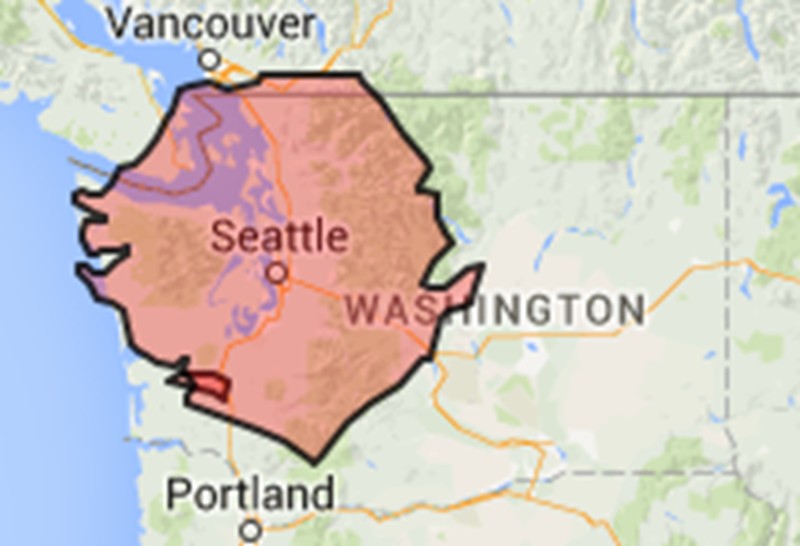
Just last week, almost fifty people died of Ebola in Sierra Leone alone and that’s an improvement. It’s such an improvement that President Obama announced an end to our military involvement in combating West African Ebola last week. But, before we sit back in our chairs and smack our lips contentedly over the improvement, keep in mind that Sierra Leone is smaller than Washington State. In fact, it’s about the size of Western Washington. If fifty people were dying in Western Washington every week, would you consider the crisis over?
If I haven’t yet convinced you of the severity of the situation in West Africa, in the interest of totally overshooting the mark, let’s explore what victims of Ebola actually experience.
What is Ebola, you ask? According to the Centers for Disease Control:
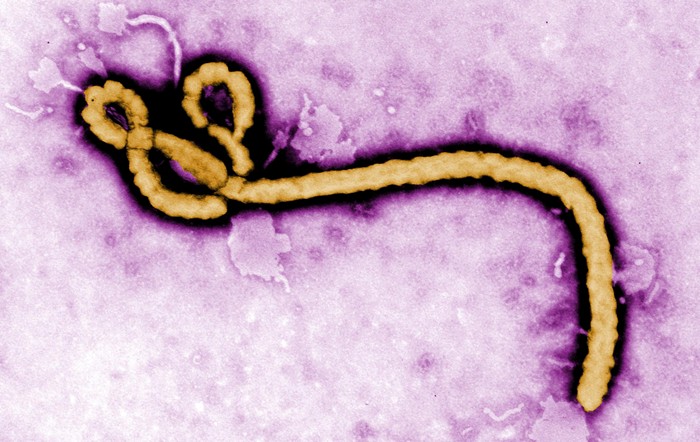
Ebola, previously known as Ebola hemorrhagic fever, is a rare and deadly disease caused by infection with one of the Ebola virus strains. Ebola can cause disease in humans and nonhuman primates (monkeys, gorillas, and chimpanzees).
Ebola is caused by infection with a virus of the family Filoviridae, genus Ebolavirus. There are five identified Ebola virus species, four of which are known to cause disease in humans: Ebola virus (Zaire ebolavirus); Sudan virus (Sudan ebolavirus); Taï Forest virus (Taï Forest ebolavirus, formerly Côte d’Ivoire ebolavirus); and Bundibugyo virus (Bundibugyo ebolavirus). The fifth, Reston virus (Reston ebolavirus), has caused disease in nonhuman primates, but not in humans.
The symptoms of Ebola include fever, severe headache, muscle pain, weakness, fatigue, diarrhea, vomiting, abdominal pain (stomach ache) and unexplained hemorrhage (bleeding or bruising).
When a person is infected with the Ebola virus, the virus invades the body’s cells and replicates itself. These cells then burst and release a protein into the body called ebolavirus glycoprotein, which attaches to the cells on the inside of the blood vessels. The blood vessels become more permeable, allowing blood to leak out. The body loses its ability to coagulate and thicken the blood, and the hemorrhaging continues, which eventually leads to shock and, finally, death.
You read that right. When you have Ebola, you have the symptoms of the worst flu of your life while your blood vessels leak and you bleed out from the inside until you fucking die. About a hundred people a week are dying this way in West Africa.
If you’re like me (hopefully, you aren’t for many, many reasons), the gravity of the situation in West Africa didn’t sink in right away, if ever. If you’re like me, you were too caught up in the news reporting about the risk to our homeland to stop and consider the very real crisis in Guinea, Liberia and Sierra Leone. If you’re like me, you probably assumed someone would find some way to do something about it, and everything would be resolved. If you’re like me, then shame on you. This doesn’t concern you as an American. This should concern you as a human. If you have any empathy at all, the suffering of so many should put a burr under your saddle and make you squirm. The Ebola in me is the Ebola in you.
Work is being done in West Africa, and the spread of Ebola is slowing. People have been scrambling to build hospitals, provide access to advanced medical care, diagnose patients and investigate contact histories to find even more people infected with the virus. Much of the effort has been focused on isolating people who’ve contracted the disease so they don’t spread it to others, and by this logic, the resolution is isolated death. That’s helping to slow the growth of the epidemic, but hasn’t stopped it.
My eyes, however, were opened when I heard about my friend’s plan to help. Dr. Sarah Paige has been a friend of mine for years. (In case you’re wondering how I could have a PhD as a friend, the answer is simple: she married my buddy Casey.) She’s done a lot of work in Sub-Saharan Africa as a social scientist and disease researcher. She started up a new initiative for Sierra Leone called the Ebola Survivor Corps.
When I heard about ESC, I freaked out. The idea is so simple, it’s brilliant. It’s one of those things that are startlingly genius and it’s been staring you in the fucking face the whole time.
Survivors of Ebola are immune from getting or spreading the disease for ten years. The Ebola Survivor Corps will be a staff of survivors that can be first responders to new Ebola cases in the districts around their villages. They can go to the houses of the sick without the risk of getting sick themselves or getting others sick, they can provide an amazing level of empathy because they’ve been through it, they can train the families of the sick to prevent infection, and can facilitate the transport of new patients to advanced medical care. Simple, right? Right. Check this out:
The first thing I did was donate a small amount of money to the cause. When that didn’t seem adequate, I foisted my services upon them, and now I’m ostensibly a member of the team.
The Ebola Survivor Corps will be doing their work in Sierra Leone, where there have been the highest number of reported cases. Right now, they’re in the fundraising stage, and they’re seeking crowd-funding to get off the ground. You can help. Would you consider donating to the cause? I won’t go into all the nuts and bolts of the Ebola Survivor Corps here. If you’re interested in learning more:
If you’d consider contributing any amount of your hard-earned dollars, it would go far. The budget for one year is small.
-
A $5 donation will buy enough fuel to cover one section of the district for one day.
-
A $15 donation will pay for one full day of supplies, including chlorine disinfectant and travel expenses.
-
A $25 donation will pay for meals and travel to isolate and diagnose 1 suspected case, cutting the risk of infection by nearly 50%.
-
A $100 donation will cover the entire cost of the program for a full 48 hours.
If you can’t contribute, spread the word by telling all your friends. Share the ESC website. Share the ESC Indiegogo campaign. At the very least, share this inadequate blog post. But, please, do something. You can help.